
Death Pact
Unbelayed roped movement, aka 'moving together': methods and methodology

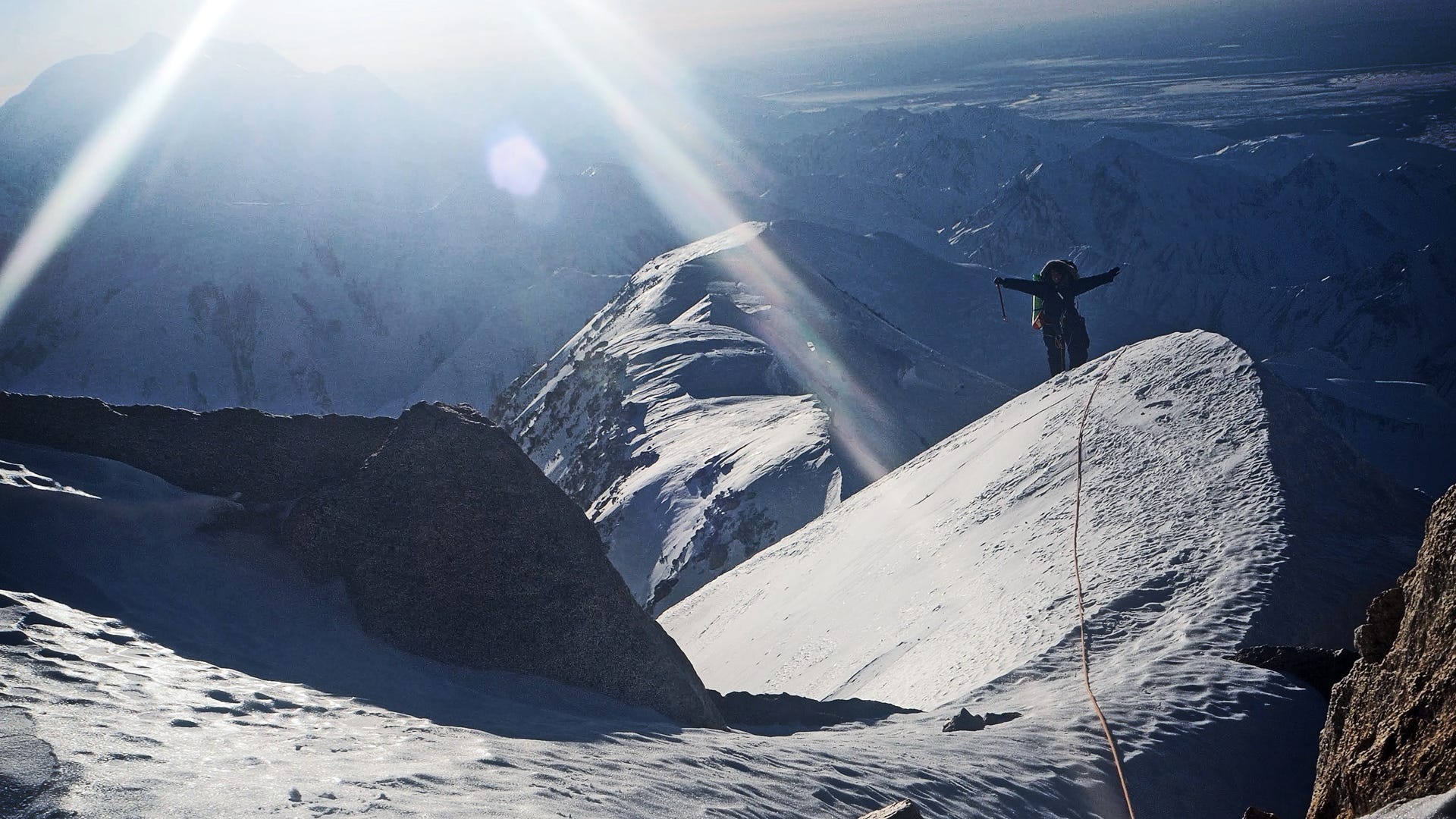
Disclaimer
Before you read on, I seem to be forever stepping on the toes of professional guides and their representatives (like the BMG). So, to be clear from the outset, this article is written for amateurs only: people who spend a few weeks a year in the high mountains, not guides, who spend only a few weeks a year out of them. Of course, guides are welcome to comment at the bottom with their thoughts, ideas, experiences and criticisms.
There’s a sad story doing the rounds on social media at the moment about the tragic death of three mountaineers in Scotland in 2023—a mountain instructor and his two clients— who died while moving together while roped up along an exposed ridge. The final fatal accident inquiry has just reached its conclusion: that “no reasonable precautions could have prevented the deaths of three hillwalkers who fell while roped together on a ridge.”
When you read down into the comments, especially when it’s reposted onto pages frequented by non-climbers and walkers—be they Sun, Guardian or Carp breeder monthley readers—you get the usual vomit of maddening opinions, 99% of which are about as constructive as trying to divine the time by dropping a wolverine and a pit bull into a dustbin. I hope this isn’t that.
I’m not going to comment on the accident or the report, but instead offer some thoughts on being roped together to one or two other people on non-technical ground, or unbelayed roped movement (URM), most commonly known as “moving together”. This may be useful for climbers and walkers who’ve yet to do it, as well as for those who already do.
Unbelayed roped movement (Moving Together)
Writing about this subject is a can of worms when it comes to what one means, but let’s begin by defining the standard view of unbelayed roped movement’ on a mountain:
Unbelayed roped movement (moving together) in alpine climbing, mountaineering, or scrambling is the practice of two or more climbers staying roped while continuously moving over ground that is considered too serious to be unroped but not steep or technical enough to justify pitched climbing. The rope is not a belay in the usual sense; it is a shared system of balance, spacing, and judgment, where each person’s movement directly affects the others. Safety comes not from the rope itself but from terrain choice, constant awareness, and the ability of all parties to move confidently and in sync, managing slack, pace, and position so that a slip does not become a fall that pulls everyone with it. Although some running protection, such as slings around spikes, would be ideal, often a team will move with no protection at all. In my definition of URM, the term ‘belay’ means both no belay/anchor from either climber, but also, potentially, no running belays either.
We could leave it there, as this is how most people view the practice, but let’s not.
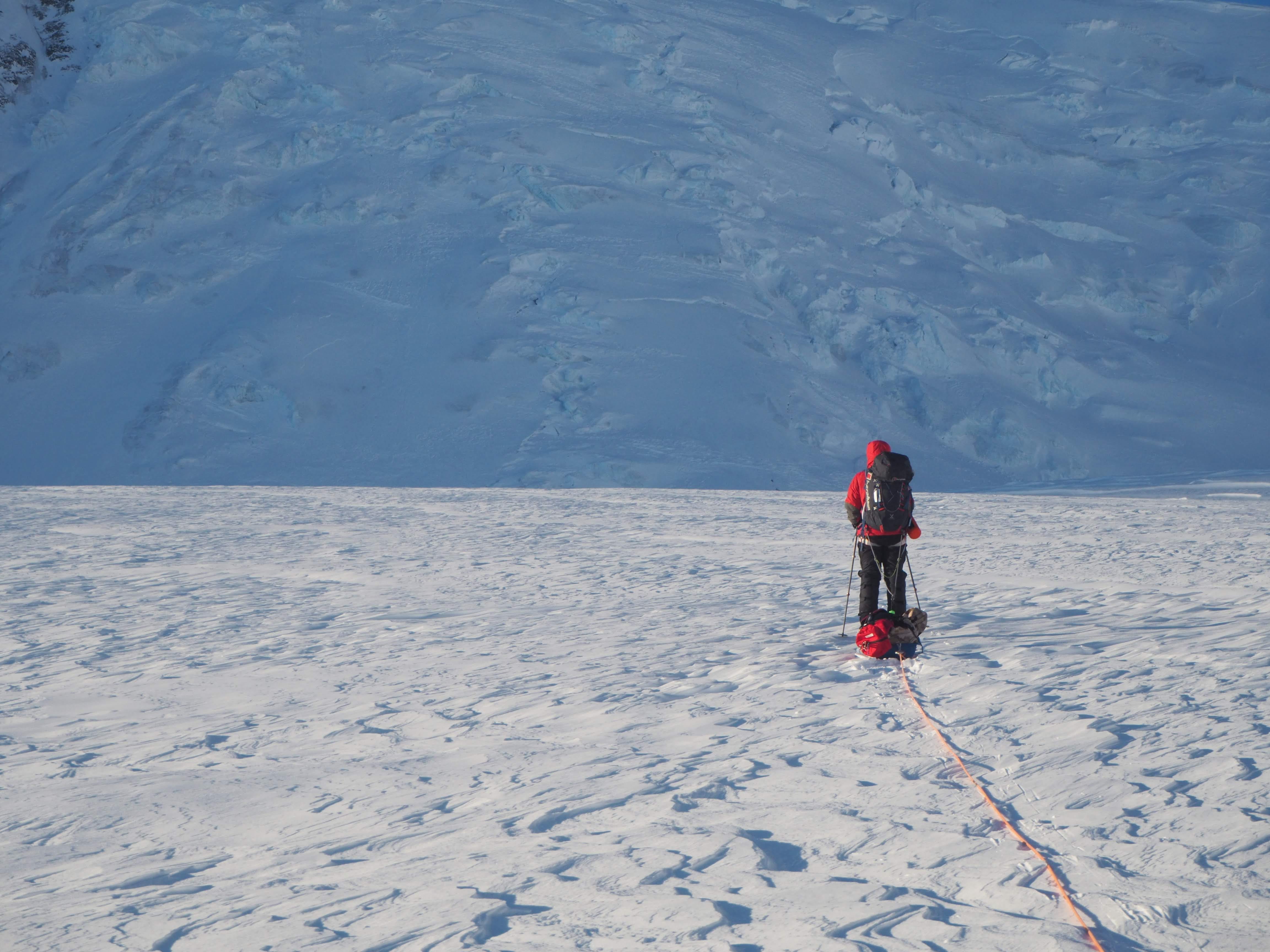
The Creeping Terror
Being a climber who’s used to things like anchors and belays, the term “moving together”, as in “we need to move together” in the middle of a technical climb, has always made me feel how I imagine a World War One soldier must have felt at the words “over the top” or “fix bayonets”. It’s never a good thing. It’s like being put on standby for a nasty climbing accident.
At least on technical climbs, in such a scenario, you usually have some runners between you and your partner (sometimes not), but on non-technical ground, snow, or long ridges, moving together sometimes feels more like a death pact: If I go, you go; if you go, I go. It’s the ultimate display of climbing trust, or blind faith, or just useful delusion. Most non-climbers, who are not used to the idea of the belay chain, seem to do it without thinking about it, plodding along, tied to another human, or if they do question it, someone always tells them to shut up.
But one thing that struck me about this unbelayed roped movement, on technical and non-technical ground, is that no one really teaches you how to do it; it’s the climbing equivalent of climbing a tree; you just do it without giving it much thought—until someone stumbles.
After the incident, or near miss, that’s when the questions start.
Unless you’re a mountain guide, and therefore get solid training in this bread-and-butter skill (livestock management), getting some solid advice from other guides, or you’ve gleaned something from a small paragraph or two in the boring sections of mountaineering manuals like Freedom of the Hills, no one is ever really taught how to “move together”.
If you do a course, or get a guide, you might be given a rough idea of moving roped together across glaciers or steep ground, or a guide might explain how they’re going to weave between rocks and tell you to jump into Switzerland if they fall into France, but really, it seems such a simple concept, what’s there to say?
I’d put this skill into the learning to ice axe arrest category, both emergency stop style techniques that are just boxes to tick, until the day you need them (actually, both skills are also complementary; a solid ice axe arrest is the only way not to seal a death pact if someone falls).
To give a funny parallel of how we approach unbelayed roped movement is like how glider pilots view parachutes. You’d imagine you’d need to do an intensive week-long course, sit an exam, and do some jumps with an instructor, be awarded a badge, and a pink jumpsuit. No, in reality, the only time I ever went in a glider, the pilot just put a parachute on me, and then said, “If you have to parachute, just jump out and pull this handle”.
I think there’s more to it—more to learn, practise, and consider—which, as someone who makes a living mining complexity from apparent simplicity, is what I’ll try to do here.
Where?
Before I continue, it’s useful to define the type of terrain someone might be moving together on, using the American terrain class system. The UK has a scrambling grading (1–3), but it’s not as widely adopted or as clearly understood. Adopting a clearer class system might even slow down influencers killing themselves or needing rescue.
The standard terrain classes run from one to five. Although the system was designed for rock rather than snow, the ideas of exposure, consequence, and risk of death apply to any terrain. I’ve tried to draw links to UK and French grades, though this is never exact—especially when you’re talking about something like a 4,000-metre peak.
1st Class: Walking on trails or easy ground with no real risk—the sort of terrain where you could walk with your hands in your pockets. If you fall, you don’t go anywhere. In the high mountains, this would be flat or gently angled, non-glaciated ground: the sort of place you might go sledging with a baby.
2nd Class: Similar terrain, but steeper and rougher, with narrower paths, scree, talus, and short sections of easy scrambling that require the hands (heavily trafficked 2nd-class routes can become polished and, paradoxically, more dangerous than quieter 3rd- or 4th-class ground). Falls are possible but unlikely to be fatal. No one would normally rope up here, summer or winter, though crampons and an axe might be required. This roughly corresponds to UK Grade 1 scrambling.
3rd Class: On rock, this is continuously steep and exposed scrambling on sound holds. You’re using your hands, but you’re not really climbing—it’s more like bouldering for walkers. The moves are easy, but a fall could be fatal. In alpine terrain, the ground may not even require hands, but a slip would still be deadly unless arrested immediately, meaning your hands are needed for an axe. This corresponds roughly to French F or PD–. On rock, ropes are often not used, though some parties may choose to; in the high mountains, roping up is traditional. This aligns with UK Grade 2 scrambling.
4th Class: Steep, exposed terrain where you are scrambling rather than walking. The holds are generally good and the climbing non-technical, but it is committing, and a fall would almost certainly be fatal. Ropes are commonly used, along with basic climbing skills. This roughly equates to alpine PD– to AD–, UK Grade 3 scrambling, or Scottish Grade I / AI1.
5th Class: This is technical climbing. Ropes, belays, and running protection are normally required to avoid dying. Fifth class is subdivided from easy (5.0) through to the very hardest climbs (5.15). While some people solo even the hardest rock or ice, ropes exist to allow mistakes or falls without fatal consequences.
I’d also add a G suffix for glaciers—G1, G2, and so on. G means a rope should always be used, because even on apparently mundane terrain, the consequence of a mistake can be fatal. Glacier travel also requires the skills to avoid crevasses and to get yourself, or others, out if things go wrong.
Why?
Primarily, URM is about speed, not safety. In many situations, if what you really wanted was safety, URM would be your last choice—possibly even behind soloing. By forgoing belays, you can move extremely quickly, and that speed translates into safety, just a different kind of safety. That’s one of mountaineering’s core paradoxes: the “safe” way can be dangerous (pitching every metre), and the “dangerous” way can be safe (soloing the whole thing).
Using a rope—even when it’s not really doing anything—also means you don’t have to carry it in your pack. At nearly 4 kg for a 60-metre half rope, that’s a real advantage at altitude. At 4,000 metres, 4 kg can feel like 6 kg; at 8,000 metres, more like 8 kg. You notice it.
Having the rope already out, with everyone tied in, also means you can instantly switch from URM to pitched climbing, or have the leader belay the second using something quick and improvised—a body belay, a spike belay, and so on.
If you’re guiding someone, or you’re simply far more experienced and leading, tying the less experienced person to you can act a bit like a dog leash. It lets you keep them in check, belay them when you think it’s needed, or even keep them moving when they might otherwise slow down. Being dragged is exhausting, even if you’re only going one percent faster than you would on your own, but it does keep things moving.
The worst “why” of all is the illusion of safety. This is really the point of this article. Being tied to another person can make someone believe that if they trip, stumble, slip off a move, or a hold breaks, the rope will save them. It won’t.
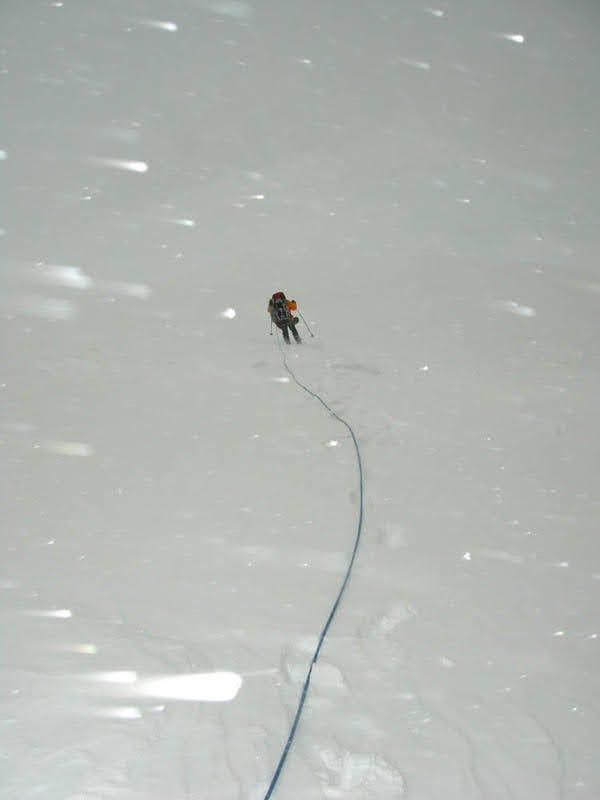
Who?
People—walkers, climbers, and guides—will generally employ URM on 3rd- and 4th-class terrain, but the reality of long alpine and mountain routes is messier than that. You might have 1,000 metres of solid 4th class, or 999 metres of 2nd class with a single move of 4th. Once you enter 5th-class terrain, most climbers switch to belayed roped movement, pitching the climbing. Some, however, use more advanced techniques that allow continuous movement—assisted unbelayed roped movement, often called simul-climbing, using a progress-capture pulley or a small ascender as a backup.
What if?
There are examples of an un-belayed rope team member falling on steep ground being saved by a partner, but they’re rare. There are also cases where both climbers fall and are saved because the rope snags on a rock or ridge, but again, they’re uncommon. Most of the time, if one person falls unexpectedly—whether it’s the leader, the second, or someone in the middle—and there are no anchors, everyone falls. Sometimes people fall and walk away unscathed. Sometimes they don’t. Sometimes one team falls and crashes into another, setting off a chain reaction where multiple URM teams tumble down a face, dragging others with them.
I’d put forward the hypothesis that the primary reason for such accidents is that people assume they can use the unbelayed rope to check a falling partner, to somehow brace, dig in, jump onto your axe, or take the load through their harness. The reality is closer to a real crevasse fall, not a practice one. It’s instantaneous. Like a sniper’s bullet: you’re gone before you even hear the shot.
Even if you hear your partner shout, by the time you register what’s happening—by the time you think about what you might do, or whether you can do anything – you’re off.
There is also the factor of weight differences, say a 50kg woman and a 100kg man. This is bad enough at the climbing, but make that a 120 metre factor two fall on the Brenva face.
If the last person falls, the front person is spun around and ripped backwards. If the first person falls, good luck trying to hold a factor-two fall with nothing but a heroic stance.
Watch the video below. Although it’s about crevasse training, it shows how poor the human body is at holding a fall—even when the people involved know the fall is coming, and even with three people on the “safe” end.
So if you think you can act as an anchor for a falling partner, you’ve got about the same chance as catching someone falling out of the sky.
But Maybe?
Theoretically, URM can work - in saving a falling second - if the terrain absorbs enough of the force before it reaches the leader. For example, when crossing a gendarme on a ridge, if the climber descending one side—or the climber following up the other—falls, the shape of the terrain may soak up most of the energy. In some cases, the other climber might not even realise anything has happened.
The same can apply to undulating or irregular ground, especially if you can get low and let the terrain take some of the strain. Rope drag helps here—usually rope drag is a problem, but in this case, it can be the thing that saves you. This is also why, when taking coils, the rope should always be clove-hitched directly into your harness: a high pull on your body gives you even less chance of holding anything.
There’s also the classic idea of “you fall left, I’ll jump right”, creating a counterbalance. It’s often talked about, but rarely works in practice. By the time you’ve worked out which way to jump, you don’t get a say anymore.
I suppose, you need to really have two completey seperate rules for a falling leader, and a falling second, as the dynamics are so different, but once both climbers are falling, there are no solutions, just the roll of a dice.
The Way
The only real protection in URM is the individual’s ability to, first, not fall, and second, to stop themselves from falling while they still can. In the mountains, this means moving well, being sure-footed, and being fit enough to keep your wits about you. You cannot have two left feet, or allow yourself to drift, switch off, or become distracted. You need to maintain a soloist’s focus with every step, because what you’re doing is often more dangerous than soloing. If you mess up, you may not only kill yourself, but your partner as well.
Crampons must fit perfectly. Straps, gaiters, and clothing need to be squared away. Nothing should be hanging from your harness, pack, or the rope itself that could snag or trip you. If you’re moving too fast at the back—remember, the front person is usually slower because they’re breaking trail—and you’re standing on or tripping over the rope, slow down. The back is where you recover before taking the lead, so there’s no need to rush.
If you fall, you have to be able to stop yourself instantly. Every fraction of a second you don’t reduces the chance that you will. This is why learning to stop—a proper ice-axe arrest, or stopping without an axe—should never be a box-ticking exercise you did for twenty minutes on a winter course years ago. You need to learn to actively fight for your life. People freeze when hit by waves; the same paralysis happens in falls. You have to train yourself to fight.
An experienced climber will choose a line—on a ridge, for example—that weaves around features, offering both climbers some protection if something goes wrong, and will use runners whenever they’re available. The scariest terrain is bullet-hard ice with no protection, where you know that if someone slips, there’s no margin at all.
One of the key skills you develop with this exposed style of climbing, especially when leading, is knowing where your partner is relative to the difficulty. If you cross a crevasse, a bergschrund, or a bouldery rock step, you can usually judge when they’ll reach it. You can pace it out, but more often you feel it through the rope as they slow down. Even without belays or runners, you’ll often try to reduce the chance of being pulled off by the line you take, or by stopping briefly in a stance, a seated belay, or even a boot belay. By getting low and letting the rope come onto you gently, you can use ground friction to make even a marginal, near-static catch possible.
In terms of how to move across classic URM terrain, I’d break it down into the following categories, and then flesh them out below.
Traveling unroped/simul soloing
Sometimes, tying yourself to someone else with no safeguard if one person falls can be far more dangerous than travelling unroped—simul-soloing. It’s like free solo × 2, multiplied again by the fact that the rope introduces a false sense of security, plus an extra trip and pull hazard. In those situations, you may as well subtract one and just solo.
This is also a fast way to cover ground—though not necessarily the fastest—but any slip or fall will likely result in serious injury or death, probably the latter. The one clear advantage is that your mistake should not kill your partner. Another is that a fall is less likely, because your risk awareness should be at 11, not 7.
Be warned, though: I know several people who have watched partners die this way, but who would almost certainly not be alive to carry that guilt if they’d been roped together. It’s not an easy choice to make, but it is a choice many fail to make.
Pros: You’re fully aware that you’re alone—together. There’s no rope above to give a false sense of security, and no rope below that you hope might snag on a rock. You also don’t have a rope to think about, trip over, or snag.
If you have good mountain sense and experience, you should be able to identify sections—or pitches—where a safer technique is required (see below). This approach suits people who can adapt quickly and switch methods without hesitation in order to stay safe and move efficiently.
Cons: Moving fast like this only works on terrain that’s genuinely safe to solo: not glaciers, not loose or shattered rock, and not unstable snow ridges with hidden cornices. You also need either a balanced team—everyone aware of each other’s abilities, strengths, and weaknesses, and operating within a shared comfort zone—or a stronger climber acting as a guardian, ready at any moment to switch to a safer technique.
Practical considerations
The key to moving unroped together is to stick together and keep a slow, steady pace. This isn’t competitive soloing; it’s competent solo travel. Don’t rush. You don’t need to be bumping your head into your mate’s arse at every move, but you do need to stay close enough to talk, give advice, offer reassurance, or quickly deploy a rope—or a hand, a foot, or an axe (never pull someone up with a ski pole, they come apart!).
On loose rock, being close can sometimes be marginally safer. Falling stones have less velocity, but more importantly, the person above can warn you: “don’t pull on that block” or “watch that flake”. If you have chalk, mark loose blocks with an X.
Think about where the rack and ropes are within the team, and where the strongest or most experienced climber should be. Ideally, have at least one rope and some rack at the front (or the back, when in descent), with the best climber at the back (“It’s easy, it’s only 6c crimps”). If you want to see how not to do it, watch any Alex Honnold simul-solo video (joke—not).
It’s also wise to stow the rope for quick access: either half-coiled on the body or stuffed into a pack like a rope bag, so it can be pulled out fast when needed.
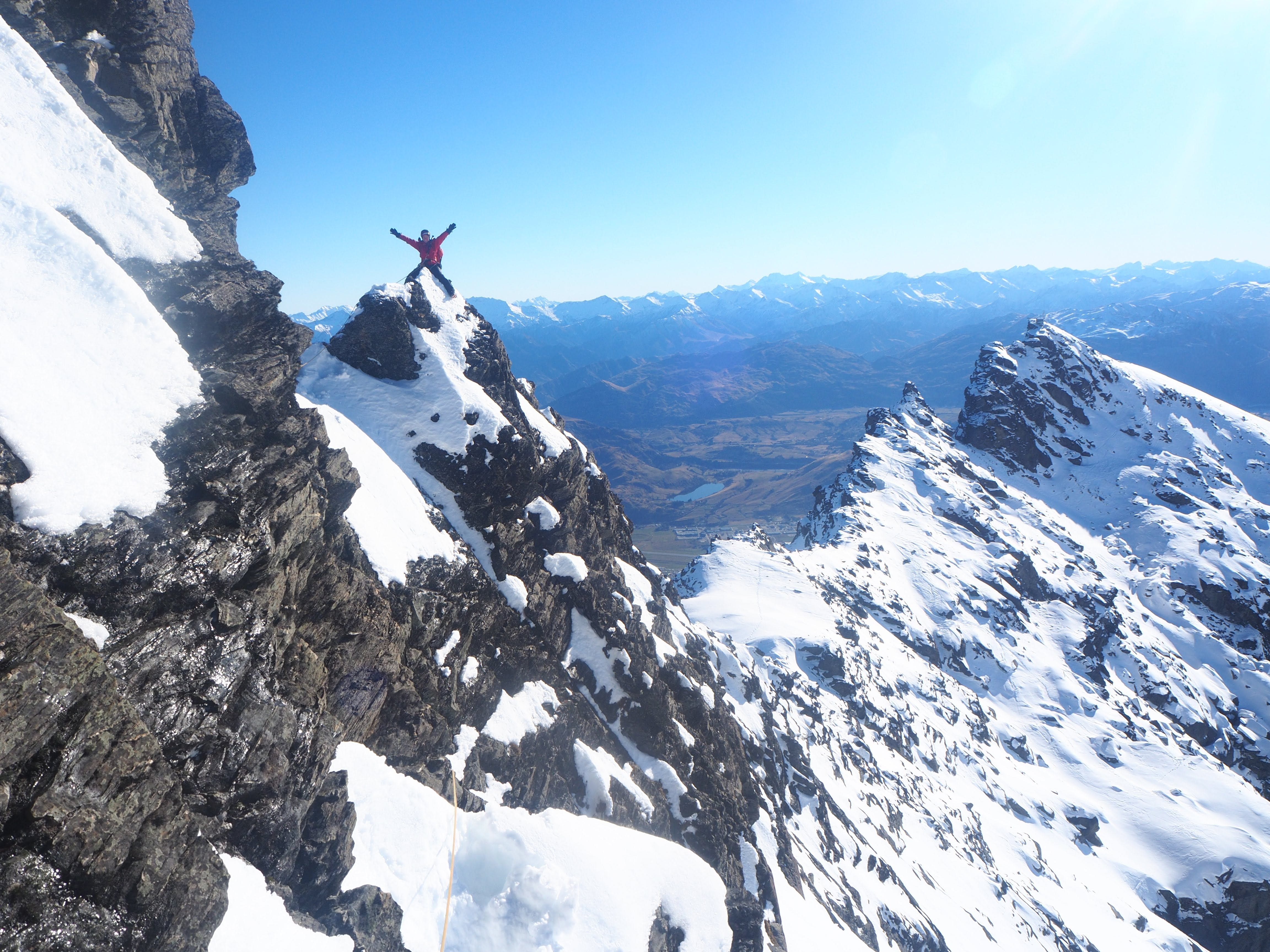
Unbelayed roped movement
This is classic “moving together”: two, three, or six climbers tied together by a rope, but with no belay chain—no anchors, no runners, no protection. If one climber falls, they will pull the others with them. There’s an age-old assumption that if the lower climber slips, the upper climber might be able to stop the fall by using their body as an anchor. Remember: “When you assume, you make an ass out of u and me,” or, more accurately here, “When you assume, you both die.” There’s also the belief that a fall might be arrested by a terrain feature—a rock spike, a ridge crest, something to snag the rope. “If I fall into Switzerland, you jump into Spain.”
In reality, tethered soloing works 99% of the time because no one falls. Why? Because most people—though not all—understand that if one goes, everyone goes. It’s a death pact. There’s also trust. The moment you tie yourself to someone, you’ve already decided you trust them. For that reason alone, never blindly tie yourself to someone you don’t know. They might have two left feet (no offence to those so afflicted), be wildly unfit, bad at altitude, or harbour a quiet death wish: “I’m taking you with me.”
The most dangerous person to be tied to is the modern one with no sense of risk awareness, raised inside a risk-assessment bubble. This is the person who falls over the edge of the Grand Canyon because there’s no barrier, or dives headfirst into the shallow end of a pool, always assuming—there’s that word again—that someone else has made sure it’s safe beforehand.
I remember once taking two novice winter climbers up The Message. To reach the route, we had to zigzag up a steep snow slope. In guide mode, we roped up before the slope and moved together, me leading, them following. If anyone had fallen, we’d all have been dragged onto the rocks below. We probably wouldn’t have died, but we wouldn’t have been happy to live either. At one point, I stopped and asked them, “What would happen if you fell now?” They looked up and answered, “You’d stop us?” No, we’d all go to the bottom. With that realisation, I saw an instant, total improvement in focus and footwork. Words have weight. Actions have consequences. Sometimes it’s vital to use a few words before you rope up, so everyone understands exactly what those consequences are. When you’re moving like this, you’re not being protected—you’re soloing together. Everyone needs to know that.
Pros: The main one is that no one has to carry the rope; it just drags along the ground. You’re also immediately ready to deploy running belays or to belay up a follower without having to unpack anything.
Cons: The illusion of protection—which is infinitely more dangerous than knowing you have none.
Practical considerations
Because you are soloing, apply everything you would if you were soloing—because you are. Pay close attention to your partners. If you don’t know them, or you know them and don’t trust them, don’t do it. Go skiing or mountain biking instead. If you have the skill and ability but your partner doesn’t, remember you’re not being paid €400 a day to put your life on the line like a mountain guide. You’re doing this for fun. Find partners you trust, or choose objectives that match the skill level of the whole team.
Short Roping
This is a guided variation of , employed by professionals, and people who know what the fuck they’re doing, and have been trained and practised in doing it in the mountains, not by novices or amateurs who have not, who are play acting (looking like they know what they’re doing). This is an important point, as I’ve seen lots of people ‘taking coils” etc in their hands, looking like they know what they’re doing, when taking coils, aka, adding more into a system when you don’t want dynamic fall, but a static one, is the last thing you should do. Often, people see guides doing it, and so they think that’s the way to do it. Don’t.
The key points about short rope unbelayed rope movement are:
The guide is not taking coils; these are secondary. They are actually holding the rope via a knot, giving them a more dynamic connection to the rope, pulling, keeping tension, absorbing shock, far more effectively than they can with a waist tie-in, but most of all, using the rope like a fly fisherman uses their line.
The team is not balanced; you have a highly experienced guide using short roping with less experienced seconds (clients) in his/her charge.
The guide is a moving anchor, and is always at the front in ascent, and at the back in descent, with traversing ground where they are most exposed.
The key thing about short roping is you do not want any slack to get into the system (your arm acts like a spring to avoid that), as it won’t work.
Short roping offers a great deal of protection to the second, but none to the leader, although taking charge of someone is a good way to sharpen your focus.
Although this is written for non-pro climbers, short roping is a good skill to practice (practice on first or second class terrain), as a time will come when you have to take charge of another, or others, for example, if someone is injured, sick, or just needs your support to get down quickly.
Beyond moving together
Eventually, you have to consider belaying each other, maybe for a pitch, or maybe just a few moves, doing so guerrilla style (sitting belay, boot belay, just a hand belay, direct belay to spike of rock, etc., etc.), rather than a three-point belay. Sometimes, knowing you have a belay, will liberate you, and allow you to climb much faster, throwing in running protection when you can. Once you have some runners in, you can then move together with a slight increase in safety, or just leapfrog up the ground by pitching it (you lead 60 metres, belay, your partner climbs up and past you for sixty metres). Sometimes a climb can be one made headlong dash, where anything goes, as long as it keeps the train in motion - with the proviso that falling and dying is the ultimate and forbidden derailment. For example, if you’ve just moved together up sixty metres of unprotected snow, and the leader gets to a body length of bad ice, they should either belay, and allow the other person to climb it (so they are protected), or place a solid runner, so if they fall, they don’t kill both of them (and then make sure they have something in place above, when the second person is climbing this bad ice).
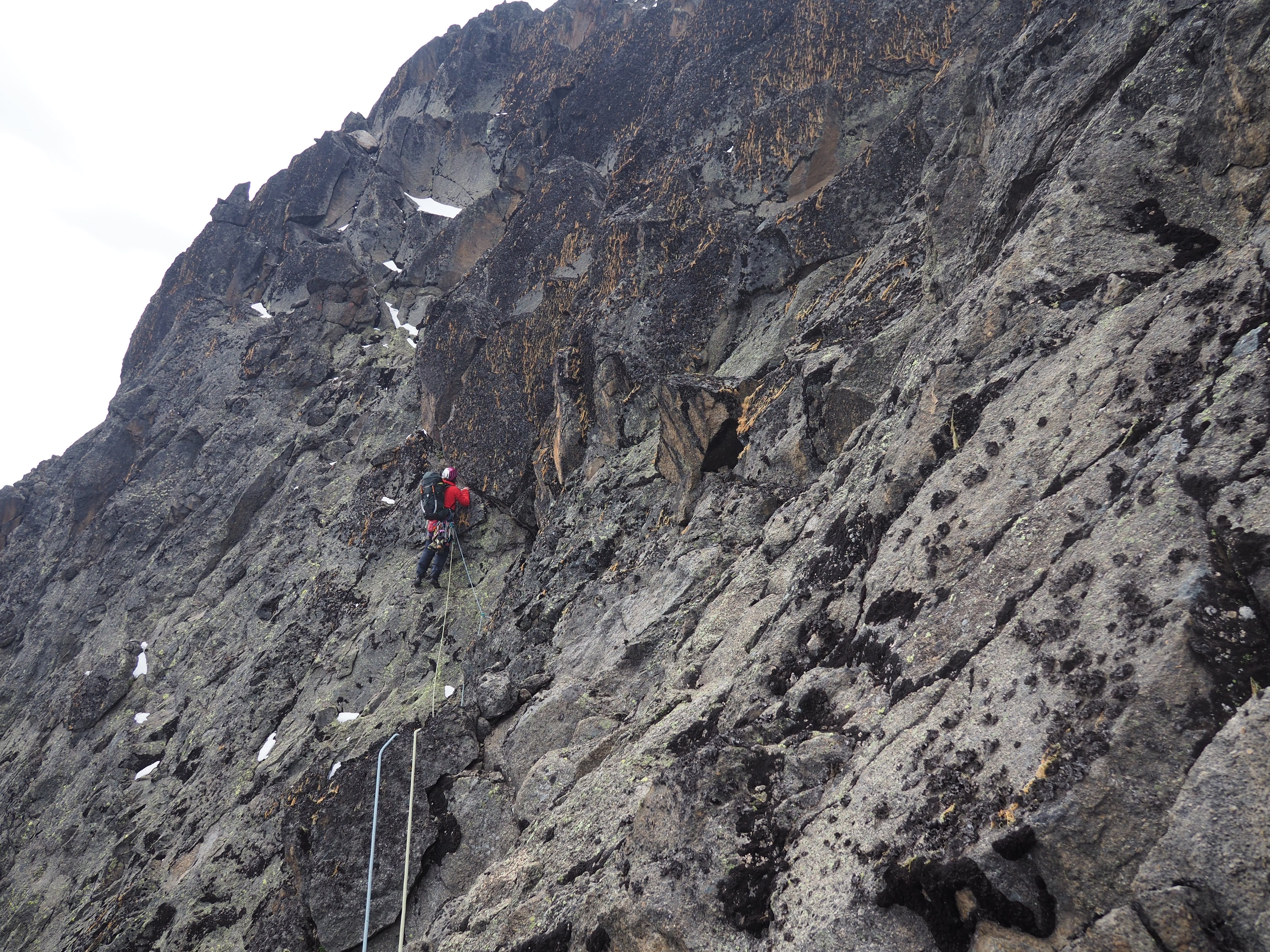
Although viewed as an advanced and exotic technique, moving together, and using micro acenders (Tibloc, Ropemen, Duck, etc.), or progress capture pulleys (Nano Traction), with skill and practice, can transform something from balls out to balls in (or female equivalent). Manufacturers hate it, but when the alternative is nothing, something is something (and learn to do it well, and it really is something).
When you see climbers like Alex Honnold and Tommy Caldwell breaking records, climbing week-long routes in a day, this is one way they’re doing it (I cover this in Higher Education), but it can be applied to any route.
You don’t have to die!
Conclusion
I apologise if this article is long, rambling, and boring. It was tricky to finish as this boring subject is actually very nuanced and complex (the simple stuff often is). The idea of ‘moving together’ seems simple if you don’t think about it, but very complex if you do, but I think we should.
If you got this far!
I’ve been giving my Substack more and more attention over the last six months, publishing about one piece a week. That’s brought in more paid supporters, each paying a little over €1 a week. I’ve even got a tick next to my name now, which means I’m a Substack bestseller. Still, that’s only a fraction of the 5,000+ people who read it, which I’m fine with—that’s the internet.
The problem is that writing, even though I love it, cuts into my day job, which is writing books. So making it pay matters. Money isn’t everything, but it’s always something. I’m at the point where I either do less of this and focus on what pays the bills, or I find a way for it to pay its own way.
In the past, I could write any old rubbish without worrying about money, because I earned from speaking. I don’t do that anymore. Writing is what I do. The first rule of making a living from what you love is to actually make a living from it.
I get subscription fatigue. €5 a month is still €5 leaving your bank account, on top of all the other things you pay for. Remember when you just bought a DVD, or a record, or had a girlfriend? (I’m looking at you, OnlyFans.) So I’ve set up a Patreon with a €1-a-month option, or €5 if you want, which also gets you cheaper books when they come out.
Thanks!
A few quick thoughts. I get at least a few clients every year who ask about moving together as a scrambling skill and I think for the majority it's a misunderstanding of the terminology. In it's truest sense it is moving roped but unbelayed across suitable terrain, but what gets missed by the uninitiated is that for 90% of "moving together" there are other factors at play to increase safety (short pitching, belaying off features, strong arming by a more experienced team member, use of running belays, use of running belays with pcps etc...).
When I teach I spend a lot of time on decision making and judging risk vs consequence of the terrain we on and which technique works best to look after the team.
This might look like holding or carrying the rope on easy and non/low consequence all the way to full blown rock climbing pitching on tricky and high consequence terrain.
The crucial thing is understanding terrain and why/when true moving together might result in something other than another news story. Glaciers it works because the terrain is uniform and falls are generally smaller + the loads is shared between the climber and the terrain. One long spiky ridges it might work because again the terrain lends itself to protecting the team. For Alex and Tommy it works because the terrain is steep and clean + additional measures are taken (second self belaying to minimise slack, use of pcps around Crux sections).
I'm always very conscious when I'm working that scrambling if far more dangerous than any other mountaineering or climbing work I do.
All that said, some of my most enjoyable days in the mountains have been moving together quickly over technical terrain. In order to do this I had; lots of experience of climbing rope work systems, knew my partners strengths and weaknesses, chose terrain that was suitable and comfortably within my ability (ie easily soloable) and finally understood that I was taking greater risk by using a non standard/typical rope work system.
The incredible difference between using URM on rock as opposed to snow and ice needs to be emphasised.
Rock has friction and features that allow for far greater safety.
Coefficient of friction near zero makes any snow slope far less suitable for the technique.