
On Bra to Rule them All
A gift to comfort equality

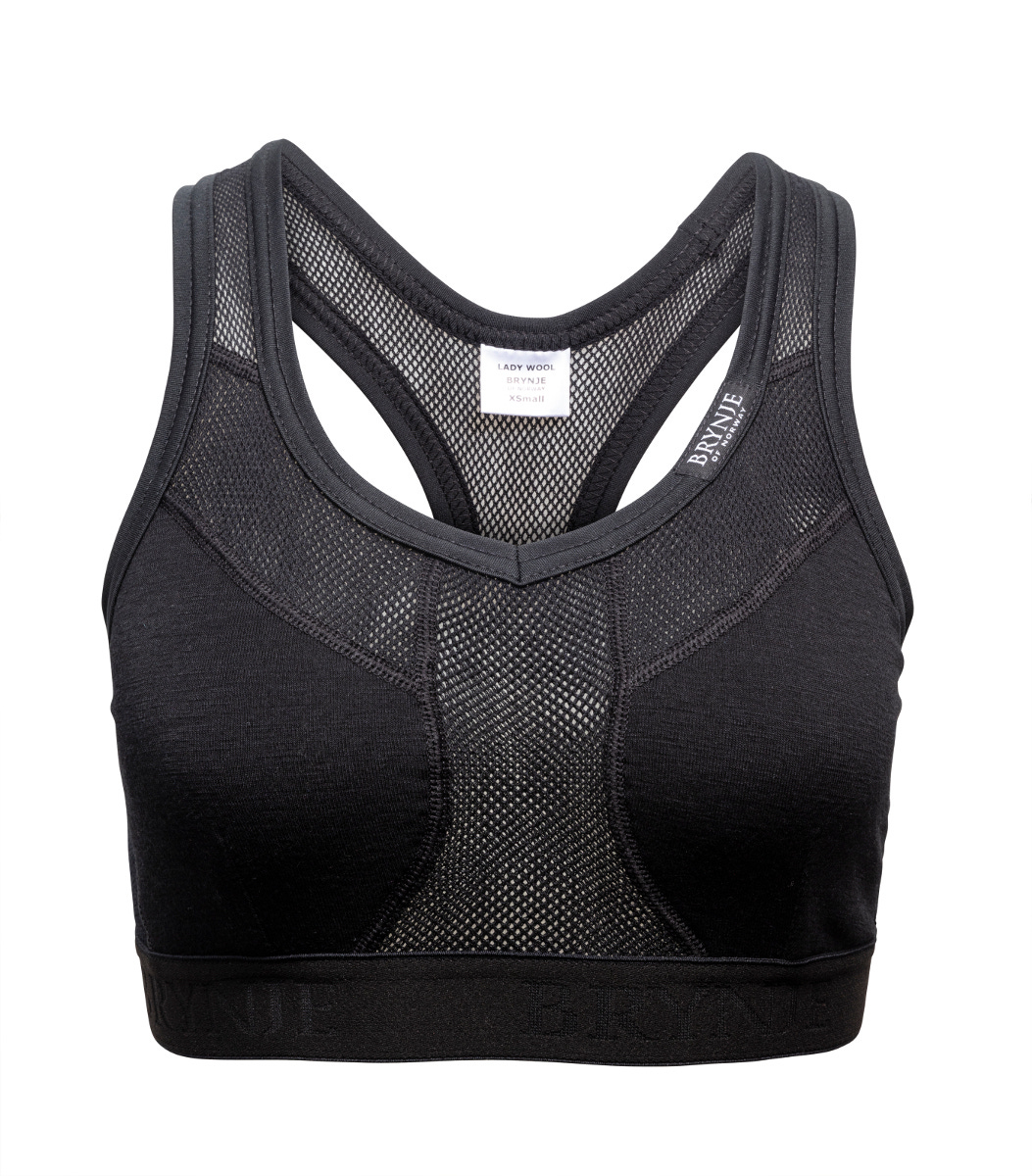
Although the following is an odd thing for a man to write, the subject being about bras for climbing and mountaineering, it stems from Christmas present research for my wife, and so I thought it might be worth sharing for New Year adventures.
Women (who wear bras) are often at a significant disadvantage to men when it comes to stop-and-go cold-weather climbing, as sports bras soak up a lot of sweat, or suck in rain, on the approach, and then undermine all the layers you wear over the top, leading to cold and misery, a wet item of clothing spoiling the day like a toothache.
Although you can try to fix this problem with better clothing and better methods, it’s good to understand why such a fix is necessary (we often fail to grasp the why in these things, just the how). The female body has more sweat glands in the chest area than men do, and there is more surface area, sometimes a bit more, sometimes a lot, so whether you have a flat or big chest, you’re at a disadvantage. Hormones can also affect sweat production, and although counterintuitive, it often seems that the fitter a woman is, the more they sweat (this could be becouse they’re more hard-charging on the approach).
The reasons for saturated, slow-drying bras, compared to a simple base layer (wool or synthetic), are multifactorial, but include the presence of elastic content (10% to 25%), such as Elastane, Spandex, or Lycra. Technically, elastic fibres should be non-absorbent, but when you add them to other materials, I find the whole fabric dries more slowly, probably because that non-absorbency reduces moisture transfer out of the fabric. This is not the case in a featherweight garment, like a pair of Lycra tights or shorts, when worn alone, as all moisture pretty much passes straight into the atmosphere, with very few fibres (elastic or non-elastic) to stop them, but a sports bra, which is generally a medium-weight garment, worn under several medium and heavy-weight garments, it becomes a problem. Fundamentally, a woman is adding an extra layer that can absorb moisture (from inside or outside), which makes them warmer when active (more sweat), and more moisture to shift, often when also made colder as a result (a warm body dries clothes much faster than a cold one).
Another problem could be bras being closer-fitting garments, so they have no convective heat loss, which may reduce moisture moving out of the fabric (you might lose some heat due to flapping of layers, but you also speed up the loss of moisture trapped in that heat). The best example of this is wearing a damp wool jumper under a shell on a windy day, and wearing it without a shell. You will be colder without a shell, and your body will have to expend energy to stay warm, but the jumper will dry in a fraction of the time (you are its washing line). I also think layers that are allowed to move more freely against each other and across the skin soak up and transfer moisture between them more effectively. Another way is to compare a skin-tight layer in a desert climate, versus a baggy shirt. It is the shirt's inefficiency that makes it efficient.
Simplicity also aids in fast drying, and a good, well-fitting sports bra can be a highly complex piece of equipment, with multiple seams or even inserts. Seams are also the enemy of drying quickly (a standard base-layer top has minimal seams for this reason), and even if the main fabric is dry, wet seams will make the whole bra feel wet.
There is also the fact that just becouse the advertising blurb says that something is ‘fast drying’, or ‘warm when wet’, such terms are relative (even a wet slice of bread could be said to be fast drying, if you don’t define ‘fast’). Yes, your sports bra might be fast-drying in a tumble dryer after washing it between circuit training sessions, but not for a two-hour winter approach and then twelve hours of ice climbing.
Wet Bra strategies
If you’re forced to deal with bras as they are, then the most common approach used by active women is to carry a second bra, as well as a second base layer (good for men as well), to change into once you get to the climb (this can also be a good idea with socks and gloves). This also assumes that the user has the experience and skill to dress as lightly as possible for any approach.
You could also experiment with using a simpler style of non-bra bra, like a ‘boob tube’, just a tube of lightweight fabric, such as Lycra, as this will only feature a single seam, and a single fabric layer (if I were Buff, I think I’d market an oversized Buff-Bra!). You could even try making your own boob tube using a base-layer fabric or PowerStretch.
Or try a tighter-fitting, compression fit base layer and ditch the bra, or, if you can, just ditch bra.
One Bra to Rule Them All
This year, my wife Vanessa joined the local mountain rescue team, and as usual, she suffered from many of these bra-related problems, the Irish weather, rugged terrain (there are very few tracks in the local mountains, meaning it’s often a sweaty slog to get up high), and the go fast, then stand around for a long time nature of mountain rescue exacerbating the issue. Often, although she had dry clothing to get into, it was so wet or inappropriate to change into that she’d just grin and bear it. Suffering, and the ability to suffer, is the key to a lot of adventures, but there’s enough to go around without training for it. So, being a good husband, I knew there must be a solution.
Anyone who’s read much of my stuff knows I'm a massive fanboy of mesh underwear (Brynje of Norway), and Ihave said many times that nothing else comes even remotely close to boosting your comfort and survivability in extreme weather. This has been reinforced this year as I’ve been doing a lot of sea kayaking, often at night, and in wet weather (it’s always damp weather on the West coast of Ireland). I will usually do a circuit for speed, which is always a very hard thing to dress for, being always clammy cold or clammy hot. I generally just wear a long-sleeved Brynje top and a Palm dry top, but I’m also testing other combinations, sometimes just to see how uncomfortable they are. Sea kayaking is a fantastic test of the advertised ‘wet warmth’, as under a non-breathable cag, nothing dries.
Even after all these years, and about 25 years of wearing mesh underwear, I had a ‘wow, this is good stuff’ moment recently when I did a 16km loop, stopping at the halfway mark in a sheltered spot for a quick drink of tea and a Snickers bar. The temp was around 3 degrees C (I had my Poogies on my paddle). I was aware of how sweaty I was when I stopped, and was fully prepared to get really cold as I drank my tea (it was really discomfort by design, like experimenting on myself, to see how bad it was when I was in control). But no discomfort came. My body went from hot, then warm and clammy, but never moved into natural and clammy, then just cold; it just went to dry neutral. All the dampness was still there as it could not be magically removed from the base layer or cag, but none of it was in contact with my skin, the air holes in the underwear filled with dry, still air, heated by my skin, and the mesh in contact with my skin, dry, its surface fibres non-absorbent. With clothing like this, the faster your skin dries, the faster it begins to warm, the faster you dry the fabric, the faster your skin dries, etc. Skin contact wose, it’s a little like fibre pile, when the pile tip (tips to skin) are 100% dry, while the other 95% of the pile is still saturated, the result being you feel dry and so warm, as conductive heat is now stopped (think back to going swimming in the sea as a kid, and how cold you were, until your mum toweled you dry).
And so, I went to Brynje website to see if they now made anything like this, and sure enough, they had a new product that looked perfect, a mix of Polypropylene mesh and merino wool for the cups (Polypropylene is far too abrasive for sensative skin, and is not ideal for any activity where there is a lot of friction involved unless you add a layer inbetween).
The bra is about 20% more expensive than a normal sports bra, and looks 100% less sexy (unless you’re into mesh), but after five days on the hill post-Christmas unwrapping, it appears to be twice as good as any equivalent bra she’s used, being that perfect piece of kit, in that it works so well, you’re not even aware that its doing such a great job, or even how bad things used to be (again, you also need to know how to layer when active).
And so, by the simple gift of a bra, I’ve been able to gift just a little more gender equality on the hills in 2026 : ).
Happy New Year!
A lot to unpick there, and from another outdoor woman, thank you.
Thanks for the rec! For those of us who can't afford Bryndje or can't easily find it where we live, I'd like to mention that you're on to something with the tube bra fabric minimizer idea, but it's gone a bit in the wrong direction.
Thing to keep in mind is that not all female upper body tissue is created equal, sweat-wise. Areas like the ribs or sternum or spine or clavicles, with big blood vessels close to the surface, sweat *a lot*. Back muscles too. However, breasts themselves, being mostly fat tissue under the skin,aren't that metabolically active and stay quite dry.
Therefore, to minimize bra wetness, you'll want something like a string bikini. Breasts should be separated not pushed together like in a sport bra, otherwise you'll sweat a ton, cups can be full fabric but anything else should be as spaghetti strap as biology allows it, and avoid as much of the high-sweat skin and bones areas as possible while maximizing support. Tube top fails because it's heavy duty in the sternum and back strap, and doesn't separate... same issues as a regular sport bra but less support. Part of the reason the Bryndje bra is so good is that it's a string bikini part covered in mesh to make it look like a sport bra. But in my experience and the experience of many of my friends, even with a sweated out tshirt, the 5 euro cotton bralette from Poshmark-equivalent will only be uncomfortably wet around the rib band once you switch shirts. If I wanted to spend 15 euro I'd make that band of a quickdrying but still loadbearing material.