
Reclamation
How outdoor institutions destroy themselves

When people ask me why I never appear at Kendal Mountain Festival anymore, having been a regular for about twenty years, I tend to joke that it’s because it’s gone all woke now – which I didn’t really believe, thinking instead that the real reason was on me, not them.
I thought the real reason was that when a festival matures and grows up, goes from an amateur affair run on nervous energy, shambolic enthusiasm, and beer to something less dangerous and edgy – safe, corporate, profitable, dependable, spreadsheet-able – well, things have to change, and I can’t.
Where once it was a couple of guys, Brian and John, who somehow found the time between work and climbing to pull together something unique and special, a true “happening” for climbers mostly, now you have full-time staff, institutional and corporate responsibilities, the bank, and an audience no longer just climbers but everyone within and without the outdoor “space”. Although I’m sure Brian and John would have loved to make money doing it, they didn’t; now it’s business.
Where once you might have a fist-fight in the bar and a story to tell afterwards, now you need good order, for people to behave, to be family-friendly both in the bar and on the stage. Better to have film after film from Nat Geo than John Redhead talking about simulated sex with a melon.
I know people new to the festival would be shocked to experience how it used to be – the chaos – but I think they’re also missing something: the energy, the edge. I suppose it’s like going to a well-loved but smelly, dirty, and a little dangerous venue to watch The Fall, where Mark E Smith came on late, the sound was shit, sweat dripping on your head as you danced, and you ended up with a black eye somehow and lost your shoes, versus going to watch Ed Sheeran at the O2. This is the reason people like McDonald’s: they will never be let down or surprised.
I think my problem is that I’ve always been a loose cannon, an unsafe pair of hands. The more you try to tie me down, the more you ask me to be careful, to mind my tongue, the more I shake, rattle and roll. I can’t help but be rude, inappropriate and common because that’s what I am. This is both a failing and my strength when it comes to standing on a stage, writing, being me – neither I nor the audience know what will come next. What is said may be offensive, upsetting, make you angry, make you laugh, or all four at the same time, but at least it’s honest.
I suppose I saw the writing on the wall for me and KMFF one letter at a time: the things you did began to have consequences, not just for you but for the festival itself. Some offhand comment or joke could end up giving someone innocent a headache, give the opportunity for someone to throw their weight around, to feel themselves important for a moment via the act of taking offence.
I remember once meeting the beautiful naked wild swimmer Natasha Brooks at the festival (she had clothes on) – the kind of dream outdoor woman that would be untenable for mortal men, instantly fall-in-lovable. The fact she had a film in the festival of her swimming around Snowdonian lakes only heightened the feeling. Another film-maker asked if I’d met Natasha, and although I felt bad the moment I said it, I replied, “I’ve come across her a few times.” Even then such a joke was terrible – a hanging offence these days – but it was also funny for being so, and I’m sure for many it was also true. Unfortunately for the unidentified film-maker, he later repeated my joke on stage, which did not go down very well at all (yes, I might be inappropriate, but I’m not stupid).
The change in KMFF probably reflects the change in the outdoor scene – the outdoor industry, film-making, speaking and all the rest. Back then you just had raconteurs; only Bonington and Messner were corporate. Now everyone’s a bloody motivational speaker or worse: you go to listen to someone talking about their global travels and adventures and end up paying for a lecture on global bloody warming.
With big corporate sponsors comes cash, but it’s cash with strings attached. No longer is it money to support something central to the climbing community, a gathering. If you secured funding from an arms manufacturer like Raytheon (just an example), they would demand you help them fill their corporate social-responsibility checklist, get HR off their backs (no one had HR issues until HR), ticking all the current boxes: gender, diversity and inclusion, anti-racism, environment and sustainability. Yes, big-badge X brand may be making their crap plastic fast-fashion products in Cambodian sweatshops, having sacked all their indigenous staff and bulldozed their expensive factories (due to costly employment regs, wages, environmental red tape and safety standards), but greenwash the cash with an evening of bully-pulpiting that the audience are guilty of all the original sins – wealth, sexism, racism, planet-killing – and it’s money well spent, a line or two on the end-of-year report.
This funding issue and the insertion of identity politics where it doesn’t belong is an issue in almost all areas of society these days – the dreaded culture wars – but especially in sport and sporting bodies, where central-government funding depends on such crusades. More and more funding is directed into identity politics, meaning people’s jobs depend directly on racism, sexism, ism-ism, leading to outcomes that are generally counterproductive, toxic and damaging to everything and everyone. Worst of all, the problems are always nebulous, filled with empty corp-speak like advertising copy, generally because the people doing this work can’t even grasp it themselves (culture is a difficult and dangerous thing to grasp; it could have repercussions, blowback on you).
I’ve seen this creep through all our most loved outdoor institutions, from the BMC to the Access Fund – the statements to action identical, cut-and-pasted, and equally devoid of anything but bluster. Change is hard, especially if you don’t understand the problem, but a comment on an Instagram post? Well, that’s easy.
And so I watched KMFF go from a bit woke to full woke, both in what’s programmed at the festival and in the statements on their social media.
Here’s an example of a recent post:
“Jaha and Liv have been deep-diving into stories around the reclamation of the Great Outdoors for BIPOC communities. They are fuelled and inspired by the stories at the moment about the Mass Trespass recently!
Last month, hundreds gathered for a protest calling for greater access to the outdoors for people of colour and those from the working class…”
For those who don’t know, BIPOC stands for Black, Indigenous, and People of Colour. I’d hope most sane people would understand how inane this comment is, but also how easy and common. It’s not that it’s beyond criticism – even offensive – but rather that people dare not question its dogma.
I’ve been ordered by my daughter not to get into trouble on social media, but I couldn’t help myself and typed in the comments: “Reclamation?”
The reply was: “the process of claiming something back or of reasserting a right”.
My reply (before my daughter noticed) went as follows:
I’ve yet to see any of these statements name names: who or what institution has taken what that has to be claimed back, who/what is denying people their rights? Without being clear about the issues and how they can be solved, it can come off as just noise and lazy social-media filler – or worse, that KMFF itself and the entire outdoor community (your customers) are guilty of some form of original sin and must demonstrate repentance. As an aside, there are also few BIPOC visiting London museums even though they are free to enter, so perhaps the problems don’t lie with “us” (society) but “them” (the infinitesimal number of people who define themselves as BIPOC).
I suppose my problem in all this is that I care. I care about climbing and its heritage, I care about KMFF, and most of all I care about people – whatever shade or gender they are – that this clunky, cack-handed, toxic and corporate way of going about things is eroding everything we hold dear.
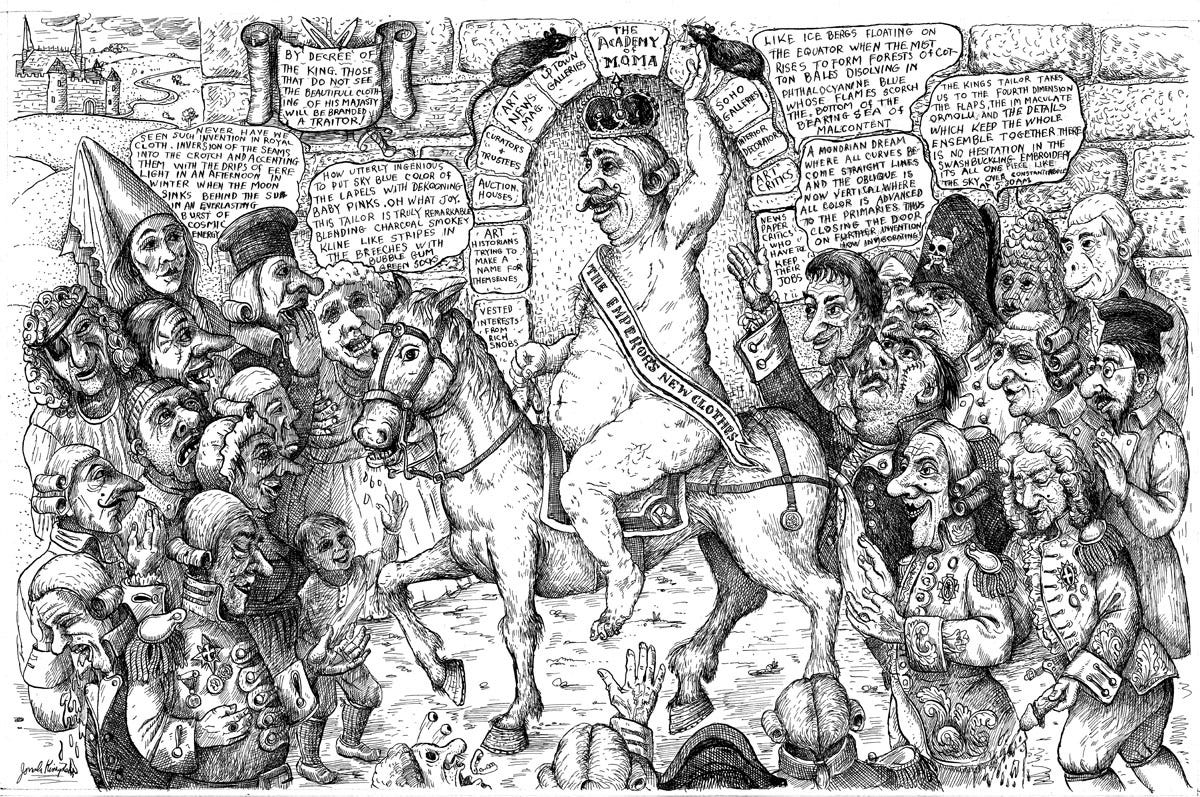
Most of the people doing it know it’s wrong but are too scared to say anything, while some believe it’s right only because the silent majority daren’t point out how empty it all is – just a Potemkin village of an idea. Such narratives do not serve the purpose they’re designed for; they only serve themselves and their managers.
And then you have the true believers who, like any true believer, cannot be diverted from their course. These people form a tiny minority but they’re the source of the problem. They’ve found their calling and will embed themselves in the things you love, pretend to love it too, but once they’ve hollowed it out and killed it they won’t spend a second considering the damage they’ve done – how everything and everyone is worse, more hateful, angry, bitter, divided. No, they’ll just consider death its just reward and move on.
So what I’m saying, I suppose, is for people to perhaps be a little braver, a little more loose-cannon-like, in speaking out, speaking back. Yes, you might be called names, but it’s for you to know what’s in your heart, not the heartless. I’ll also admit that perhaps I’m wrong – after all, I am “male, pale and stale” – and maybe I just don’t get it. Right or wrong, I do think it’s best not to second-guess what’s in the heart and the gut, but to stand up for the things you love and care about preserving. Call out bullshit.
I have sacked my Alpinist subscription this year for the same reasons. Less and less about climbing, more and more about soul searching, poetry and redemption. I think AK said once that whilst a more ‘woke’ agenda (sorry, not sure how else to describe it) ticks boxes for some, they are not the ones who will pay for - or subscribe to - a magazine. It’s a real shame but I don’t see much future for the once-great publication.
Absolutely brill.